


Our support to you
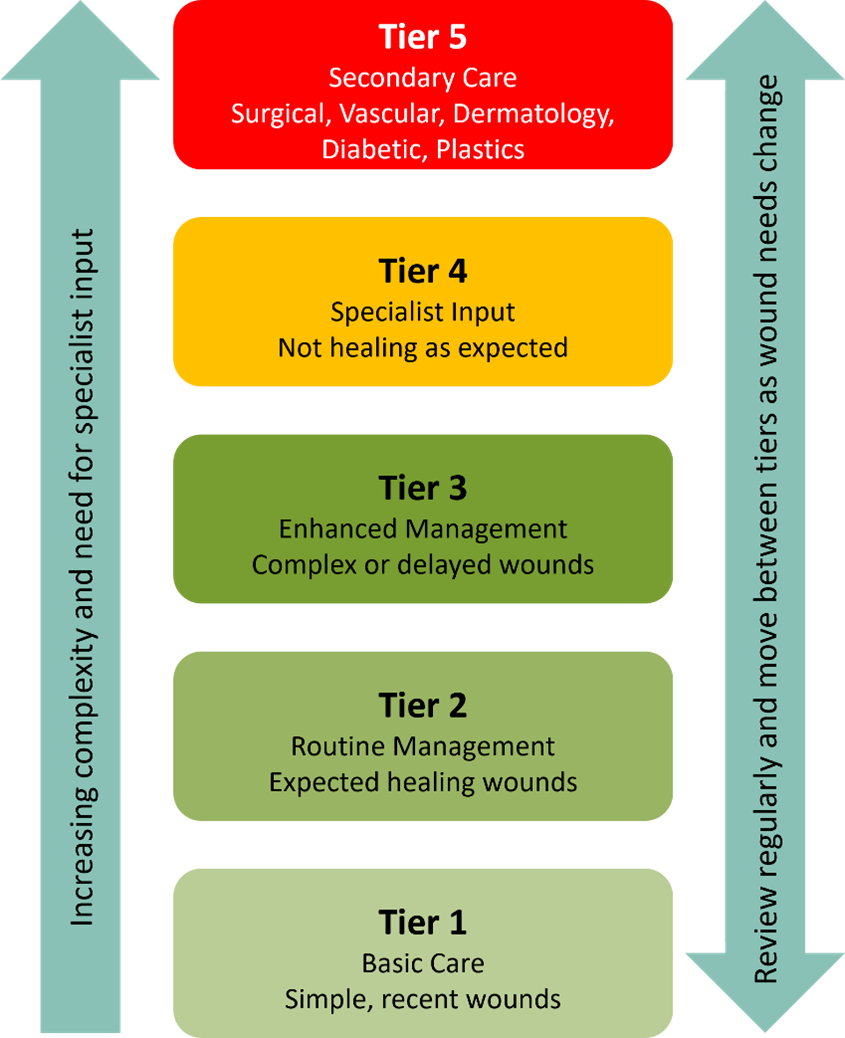
We provide a single point of access to wound care resources across Northamptonshire, helping clinicians quickly find guidance, pathways and support. This includes the tiered wound care pathway to help identify wound complexity and guide decisions on management or escalation of care.
We also signpost to education and training linked to workforce knowledge and competency frameworks, supporting staff to deliver safe, effective and evidence-based wound care. Our aim is to promote consistent practice, build capability and ensure patients receive timely and appropriate care.
Wound care pathway and workforce development
The Northamptonshire wound care approach is based on a structured pathway that supports consistent assessment, treatment and escalation of wounds. The tiered model helps clinicians identify the level of complexity and ensures that care is delivered in the most appropriate setting, whether that is routine management in primary care or referral for specialist input when wounds are not progressing as expected. This supports timely decision making and helps reduce variation in care.
Alongside the clinical pathway, the workforce framework outlines the knowledge, skills and behaviours required across different roles. It supports a consistent standard of practice and helps teams understand scope of practice, when to seek advice and how to work collaboratively across services. This ensures that care is both safe and aligned to best practice.
Training Requirements
Training and education underpin both the pathway and workforce development, with resources available to support staff at all levels. By linking pathway access with ongoing learning, teams are better equipped to manage wounds effectively, recognise when to escalate concerns, and deliver high-quality, person-centred care.
- Initial competency-based training is required before independently managing leg ulcers or compression therapy.
- Competency checks for Doppler and compression bandaging are arranged by the TVNs and booked through the Training Hub.
- Leg ulcer update sessions are for clinicians who completed their training 3 or more years ago.
- Many services also expect ongoing competency review and practical sign-off, particularly for compression bandaging and Doppler assessment.
Who do I contact?

Mel Mullin
Clinical Educator and PNA